
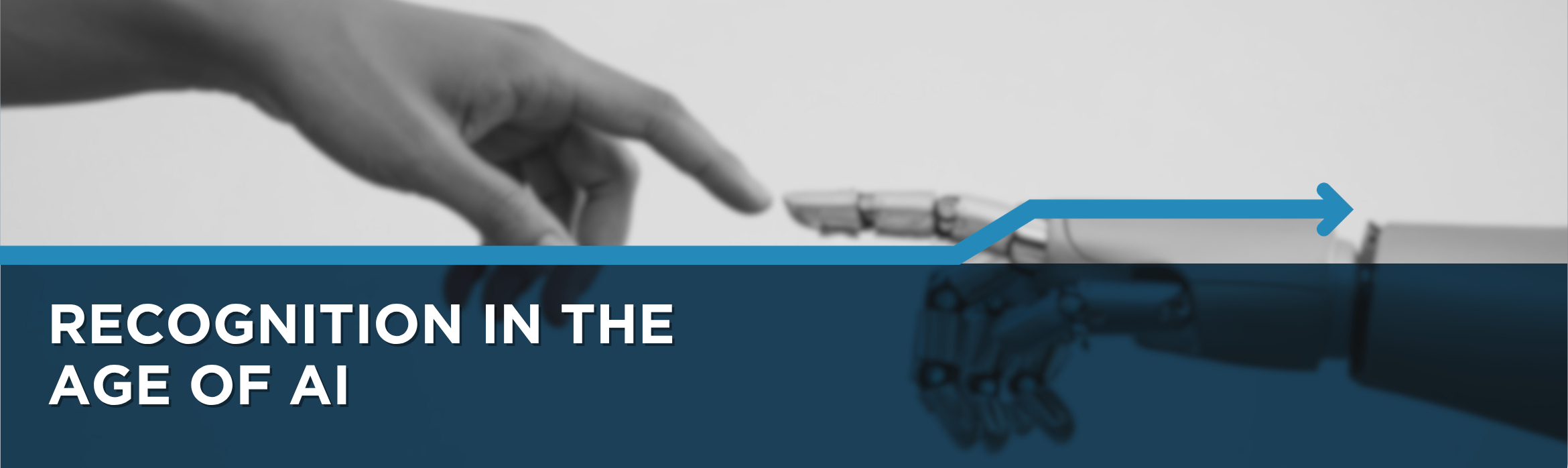
AI is changing the way we work faster than anyone expected, but here’s the twist most leaders don’t see coming: the more AI shows up in the workplace, the more employees crave recognition that feels human. Not polished. Not perfect. Human.
And the data backs it up. We recently held a webinar in partnership with Recognition Professionals International (RPI) and one of our leaders noted, “82% of employees still prefer recognition that feels personal and authentic.” That’s the heartbeat of recognition today. AI can help you get there, but only if you use it with intent.
AI is Powerful, but it Can’t Replace Heart
AI has leveled up. It can analyze employee sentiment in real time, spot recognition gaps and even predict when someone might need encouragement. It can scan thousands of messages, identify patterns and surface insights that would take humans hours.
But here’s the catch... managers that are the most successful utilizing AI as part of their recognition effort are the ones that use it to augment human decision-making rather than replace it. AI can tell you who to recognize and when, but it can’t tell your story. It can’t recall the inside joke from last week’s meeting or the late-night scramble your team pulled off together. That’s the magic only humans bring.
When AI Helps Recognition Shine
The sweet spot is using AI as your recognition co‑pilot, not your ghostwriter. During the webinar, we shared how one organization used AI to identify employees who weren’t being recognized as often as others. Managers still wrote the messages and had the conversations, but they had better intel. The result? A 31% increase in recognition frequency and a 28% boost in employee engagement scores. That’s the power of AI done right. It removes the guesswork so managers can focus on what matters most—connection.
When AI Misses the Mark
Now for the cautionary tale. Another client let AI generate recognition messages automatically. On paper, recognition skyrocketed. But employees immediately felt the difference. One employee noted, “I can tell a computer wrote this. I’d rather not get recognition than receive fake recognition.” Engagement dropped. Some high performers left. The lesson is simple: efficiency is not the goal, connection is. AI should never steal the mic. It should hand it to you at the right moment.
The Human–AI Balance That Actually Works
Think of recognition in three zones:
-
Human-only moments — Handwritten notes, face-to-face appreciation, personal stories. These moments hit differently. Employees who get this type of recognition from managers hold onto them for decades.
-
Assisted automation — AI nudges, sentiment analysis, dashboards that highlight who’s being overlooked. This is the zone where AI shines.
-
Over-automation — Auto-generated messages, algorithmic rewards, system-driven posts. These feel hollow and can damage trust.
The goal is to live in the middle zone where AI handles the data and humans handle the heart.
How to Bring This Balance to Life
A modern recognition strategy doesn’t happen by accident. It happens through intentional design:
-
Audit your recognition moments for personalization, timeliness and authenticity.
-
Use AI for quick wins like milestone reminders or dashboards that show who hasn’t been recognized recently.
-
Roll out advanced features slowly, so managers build confidence instead of feeling replaced.
-
Integrate recognition into culture, not just technology. AI is just a support tool. It’s not a replacement for the judgment and relationship-building skills of humans.
Recognition becomes stronger when AI removes friction and humans bring the meaning.
The Future of Recognition is Human-Led and AI-Supported
How we see it...AI will keep evolving, but the core of recognition stays the same. People want to feel seen and they want to feel valued. They want to feel like their work matters. The real question isn’t whether AI will shape recognition. It already has. The question is whether your organization will use it to enhance human connection or inadvertently diminish it. The companies that get this right will build cultures where recognition feels natural, frequent and real.
What part of your recognition strategy feels ready for an AI boost?
Want to see the full conversation? Watch the webinar by clicking the WATCH button below!