
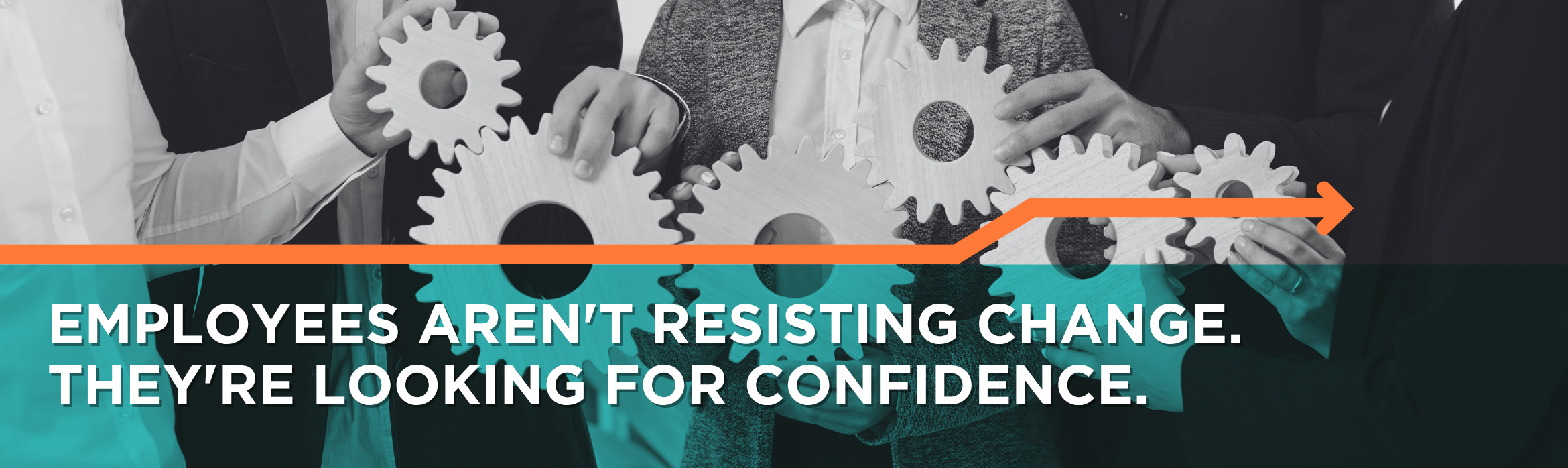
Your employees aren't resisting change. In fact, they're adapting to it every day.
They're learning new systems, adopting new technologies, adjusting to shifting priorities and finding new ways to work. The pace of workplace change continues to accelerate, and your people are doing their best to keep up. So why does hesitation still show up? Why do promising initiatives struggle to gain traction? Why do employees sometimes appear cautious, even when they're capable of adapting? The answer isn't resistance. It's uncertainty. When employees don't feel confident about what change means for their future, performance can begin to stall, even when adoption moves forward. Because people don't just need help understanding change. They need confidence that they still have a place in it.
Change Isn't the Problem. Uncertainty Is.
Most employees aren't asking whether they can learn something new. They're asking a different question: What does this mean for me?
That question has become even more important as AI reshapes the workplace. Many employees are already using AI tools in their daily work. They're exploring new technologies, improving efficiency and finding ways to work smarter. But curiosity often exists alongside concern. Employees may wonder how new tools will affect their responsibilities, their careers or their long-term value to the organization. And when those questions go unanswered, uncertainty begins to grow. Employees can adapt to change. What becomes difficult is performing with confidence when the future feels unclear.
Trust is the Foundation of Successful Change
When organizations focus only on training and communication, they can miss what employees need most. Trust. Employees want to understand more than what is changing. They want to know:
- Why change is happening
- How decisions are being made
- What success looks like
- Where they fit into the future
Without that trust, change can feel like something happening to employees rather than something they're helping build. And that's where organizations have an opportunity. The most successful organizations don't just manage change. They help employees feel confident throughout it.
How to Build Confidence During Change
Trust isn't built through a single announcement. It's built through a series of consistent actions.
It starts with listening. When employees share concerns, ask questions, or provide feedback, they want evidence that their input matters. When leaders act on that feedback or communicate transparently about decisions, employees begin to see that their voices have value. Transparency matters just as much. When employees understand how decisions are being made and how new initiatives will affect their work, uncertainty begins to lose its grip. Clarity replaces assumption. Confidence replaces caution. But trust still requires something more personal. It requires reinforcement.
Recognition Helps Employees See Their Place in What's Next
During periods of change, employees need regular confirmation that their contributions matter.
That's why recognition plays such an important role. Recognition isn't simply a reward for results. It's a signal. It tells employees:
- Your efforts matter.
- You're making progress.
- You're contributing to our success.
- You have a place in what's next.
In environments where expectations keep evolving, those signals become incredibly important. Recognition helps employees connect their daily work to the organization's future. And when employees can see that connection, they're far more likely to move forward with confidence.
Why Managers Have the Biggest Impact
Trust is built one interaction at a time. That's why managers often have the greatest influence during periods of change.
While leaders establish direction, managers help employees understand what change looks like in practice. They're closest to the work. They're closest to employee effort. They're closest to moments that might otherwise go unnoticed. When managers consistently recognize adaptability, learning, problem-solving and progress, they remove uncertainty in real time. Employees gain reassurance that they're contributing in meaningful ways, even when the path ahead continues to evolve. And that confidence can make all the difference.
Employees Deserve More than Instructions During Times of Change
Your employees don't need to adapt faster. They're already adapting.
What they need is confidence that their contributions matter, their future is valued and their efforts are helping move the organization forward. Performance doesn't come from pushing employees harder through change; it comes from helping them trust it. When you combine listening, transparency and meaningful recognition, you create an environment where employees can move forward with clarity instead of uncertainty. And when employees trust where they're going, they're far more likely to help your organization get there.
Workplace change is inevitable. Employee confidence doesn't have to be.
Click HERE to learn how Engage2Excel's Recognition Solutions help organizations strengthen trust, reinforce employee value and keep employees connected during times of change.
Sources:
PWC
Rising AI Adoption Spurs Workforce Changes
Author Joleigh Gatton
Digital Marketing Assistant | Engage2Excel
 Joleigh is a Digital Marketing Assistant at Engage2Excel, where she creates content that helps HR and business leaders better understand the trends shaping today's workplace. Her work spans content marketing, research, analytics, and social media, with a focus on turning complex ideas into clear, engaging insights. Joleigh is passionate about using storytelling to build connections and create content that helps people solve real workplace challenges.
Connect with her on LinkedIn.